

Best Skincare for Men Over Thirty: 2026 Routine Guide
Table of Contents
- What Changes in Men's Skin After 30
- How to Start a Skincare Routine for Men
- A Simple Skincare Routine for Men: 4 Non-Negotiable Steps
- Best Anti-Aging Products for Men: What to Look For
- Ingredient Interactions: What Not to Mix
- Budget vs. Premium: Where to Spend and Where to Save
- Environmental Stress and Post-Shave Recovery
- Frequently Asked Questions
Last Updated: September 13, 2026
What Changes in Men's Skin After 30
Testosterone declines slowly after 30, and collagen production drops roughly one percent per year starting in your early thirties, thinning the structural scaffolding under your skin. This guide from J5 Beauty & Skincare breaks down what changes, what you can control, and how to build a routine for the best skincare for men over thirty without wasting money.
The short answer: your skin gets drier, thinner, and slower to repair, while oil production often stays high. Add daily shaving irritation and years of UV exposure, and the damage surfaces as fine lines, uneven tone, and a duller complexion.
Collagen Decline and Skin Elasticity
Collagen and elastin keep skin firm and springy. Once production slows, the effects compound quietly for years: elasticity drops, so skin bounces back more slowly after being stretched.
The visible result is fine lines around the eyes and mouth that stay put instead of fading overnight. You cannot reverse collagen loss, but consistent sun protection, retinoids, and antioxidants slow it. Consistency matters more than any single product.
Sebum, Pores, and Post-Shave Sensitivity
Sebum control becomes less predictable after 30: some men find their T-zone stays oily while cheeks turn dry, and pores look larger because the surrounding skin has lost firmness, not because the pores expanded.
Shaving compounds the problem: razor friction strips the top layer of the epidermis, leaving skin more reactive to actives applied right after. A common mistake is shaving then immediately applying a strong acid or retinol. Wait until evening for actives, and use a soothing moisturizer post-shave instead.
How to Start a Skincare Routine for Men
Start with three products, not ten. A cleanser, a moisturizer, and a sunscreen cover the essentials; add treatments once those three are habits. Most men who fail at skincare bought a complicated system, used it for a week, and quit.
Here is the sequence that works for beginners:
- Cleanse morning and night with a gentle, non-comedogenic cleanser.
- Moisturize immediately after cleansing while skin is still slightly damp.
- Apply sunscreen every morning as the final step, even on cloudy days.
- Add one treatment (retinol or a serum) only after the first three are automatic.
Give any new routine four to six weeks before judging results, since cell turnover slows with age.
A Simple Skincare Routine for Men: 4 Non-Negotiable Steps
The best skincare for men over thirty is a simple skincare routine for men built on four steps, done consistently. Skip steps and the system underperforms, because each one prepares skin for the next.
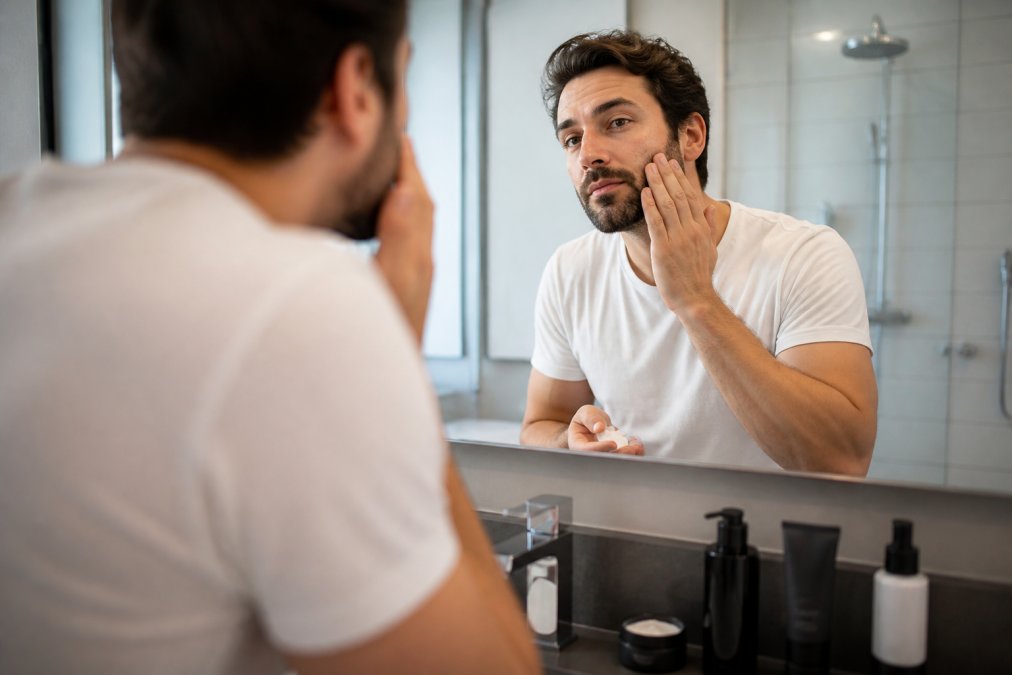
Step 1: Cleanse
Use a gentle cleanser twice daily. Harsh bar soaps strip the skin barrier, triggering more oil production as your skin compensates. Look for non-comedogenic, oil-free formulas if you are acne-prone.
Step 2: Treat
This is where serums and actives earn their place. Vitamin C in the morning supports collagen and brightens pigmentation; retinol at night speeds cell turnover and softens fine lines. Introduce one active at a time.
Step 3: Moisturize
Moisturizer hydrates and seals in everything applied underneath. Hyaluronic acid draws water into the skin; ceramides reinforce the barrier. Both hydrate without heaviness.
Step 4: Protect
Sunscreen is the single most effective anti-aging product you can buy (the American Academy of Dermatology). UV damage accounts for most visible aging and happens on overcast days too (the EPA). Choose broad-spectrum SPF 30 or higher, and reapply if you are outside for extended periods.
| Step | Product Type | When | Primary Job |
|---|---|---|---|
| 1 | Gentle cleanser | AM + PM | Remove oil and grime without stripping |
| 2 | Serum or retinol | AM (vitamin C), PM (retinol) | Target lines, tone, texture |
| 3 | Moisturizer | AM + PM | Hydrate and seal the skin barrier |
| 4 | Sunscreen | AM | Block UV damage |
Best Anti-Aging Products for Men: What to Look For
The best anti-aging products for men contain proven actives at effective concentrations, not trendy extracts. What separates a serum that works from one that sits on your shelf: the active, its concentration, and how the formula protects it from degrading.
Retinol and Retinoids
Retinol is a vitamin A derivative that speeds cell turnover and signals skin to produce more collagen. It is the most studied over-the-counter anti-aging active. Two caveats: it is not prescription tretinoin, it is weaker and converts in the skin, so results take longer, and it degrades with light and air, so opaque, airtight packaging (pumps, tubes) beats jars. Start with two nights per week and build up; irritation is the main reason men quit before results show.
Vitamin C
Vitamin C neutralizes free radicals from UV exposure, supports collagen synthesis, and fades pigmentation by interfering with excess melanin. The catch is stability: L-ascorbic acid oxidizes quickly with light, heat, and air, and a serum turned orange or brown is doing little. Look for opaque or dark-glass packaging, and consider gentler but less potent derivatives like sodium ascorbyl phosphate if your skin is sensitive.
Hyaluronic Acid
Hyaluronic acid is a humectant that draws water into the upper layers of skin, holding many times its weight in water, which is why it temporarily plumps fine lines and layers well under moisturizer (PubMed). It is a hydration tool, not a collagen builder, and it will not reverse wrinkles. In dry climates, apply it to damp skin and seal with moisturizer, because in low humidity it can pull moisture from deeper skin instead of the air.
Niacinamide
Niacinamide is a form of vitamin B3 that supports the skin barrier, helps regulate sebum, and can improve pores and uneven tone. It is well tolerated and pairs with most actives, making it a good starter for men who find retinol or acids too irritating. Concentrations of 2 to 5 percent are common; higher is not automatically better, and very high percentages cause flushing in some people.
Ceramides
Ceramides are lipids that occur naturally in the skin barrier; topical versions replace what is lost with age, cold weather, and harsh cleansing. They do not treat wrinkles directly, but a compromised barrier makes every other active more irritating, so ceramides let retinol and acids work without wrecking your skin.
What Most Guides Skip: Concentration and Formulation
An ingredient list tells you what is in the bottle, not whether there is enough to matter. A vitamin C serum with a token amount near the end of the list does little, and a retinol in a clear jar may have degraded before you opened it. Look for the active listed early, opaque packaging, and a stated concentration. Dermatologist-tested formulas reduce reaction odds, but patch-test any new active on your inner forearm for a few days.
Ingredient Interactions: What Not to Mix
Stacking actives is where routines go wrong. Retinol and strong acids in the same session can overwhelm the skin barrier, causing redness, peeling, and sensitivity that takes weeks to settle.
Keep these rules in mind:
- Retinol and AHAs/BHAs: alternate nights, never layer
- Vitamin C and retinol: use vitamin C in the morning, retinol at night
- Benzoyl peroxide and retinol: benzoyl peroxide can deactivate retinol, so separate them
- Multiple acids at once: pick one, not three
If your skin stings, burns, or flakes persistently, cut back to cleanser and moisturizer for a week before reintroducing anything. The skin barrier recovers faster when you stop aggravating it.
Budget vs. Premium: Where to Spend and Where to Save
Most guides say spend on actives and save on cleansers, then stop there. The useful version is tiering: what a complete routine looks like at drugstore, mid-range, and premium budgets, and where extra money buys something real versus packaging.
The Drugstore Tier
A functional routine can be built almost entirely from drugstore brands. Gentle cleansers, basic ceramide or hyaluronic acid moisturizers, and broad-spectrum SPF 30+ sunscreens are widely available at low cost, often made by the same contract manufacturers as premium lines. The trade-offs are texture and elegance: drugstore moisturizers may feel heavier or pill under sunscreen, and drugstore vitamin C serums are more likely to use less stable forms. For a man starting from zero, this tier is the right place to build the habit before spending more.
The Mid-Range Tier
This is where the best value usually sits. Mid-range brands invest in two things that matter: stable vitamin C serums in proper packaging, and encapsulated or time-release retinol that reduces irritation. You are paying for formulation chemistry, not marketing. If you upgrade one product, upgrade the retinol first, because irritation is the main reason men abandon it.
The Premium Tier
Premium pricing buys higher concentrations of proven actives, better texture and absorption, and more clinical testing. It does not buy a different mechanism: a premium and a mid-range retinol both work through vitamin A, but the premium one may be more tolerable or pleasant. That matters, because the routine you use daily beats the one that sits in a drawer.
Where the Money Actually Matters
Spend on sunscreen, retinol, and vitamin C, the three categories where formulation quality, stability, and concentration genuinely change results. Save on cleansers and basic moisturizers, where affordable options do the simple job well. Niacinamide and hyaluronic acid serums are also reasonable places to save, since the ingredients are cheap to produce and tier differences are mostly cosmetic.
A Note on Subscription and Bundled Routines
Bundled kits and subscription boxes can be a reasonable start, but read what is in them. A kit is only a good deal if the actives are at meaningful concentrations and the packaging protects them. A retinol in a clear jar and a vitamin C serum in a dropper bottle means you are paying for the box, not the formula.
Environmental Stress and Post-Shave Recovery
Pollution, cold weather, and indoor heating pull moisture from skin and increase oxidative stress. Antioxidants counter this, another reason vitamin C earns a permanent spot in your morning routine.
Post-shave recovery deserves its own step. After shaving, the epidermis is temporarily compromised: rinse with cool water, pat dry, and apply a fragrance-free moisturizer or post-shave balm. Avoid alcohol-based aftershaves, which sting and dry skin further.
If you shave daily, a pre-shave oil reduces razor drag, meaning less irritation and fewer ingrown hairs. For men dealing with both acne and sensitivity, keep post-shave products oil-free and non-comedogenic to avoid pore congestion.
Frequently Asked Questions
What changes in men's skin after age 30?
Collagen production drops roughly 1% per year starting in your late twenties, which leads to fine lines and reduced skin elasticity. Sebum output can shift too, leaving some men oilier and others drier. Cell turnover slows, so dead skin builds up and dullness sets in. Sun damage accumulated over decades starts showing as pigmentation and wrinkles. A skincare for men routine that supports collagen and hydration becomes more important now than in your twenties.
Is it too late to start a skincare routine at 30?
No. Starting at 30 is actually ideal because you can still prevent most visible damage. The key is consistency: cleanse, moisturize, and apply sun protection daily. Adding a retinol serum at night speeds cell turnover and supports collagen. Most men see smoother texture and fewer fine lines within eight to twelve weeks of a simple skincare routine for men. Preventative care now saves you from corrective treatments later.
How do I choose the right moisturizer for my skin type?
Match the formula to how your skin feels a few hours after washing. Oily or combination skin does well with an oil-free, non-comedogenic gel moisturizer that provides hydration without pore congestion. Dry skin needs a cream with hyaluronic acid and ceramides to repair the skin barrier. Sensitive or reactive skin should look for fragrance-free, dermatologist-tested options. If you shave daily, a moisturizer with soothing ingredients like niacinamide helps calm post-shave irritation.
How often should men exfoliate their skin?
Two to three times per week is enough for most men over thirty. Over-exfoliating strips the skin barrier and triggers more oil production, which leads to pore congestion and irritation. Use a chemical exfoliant with salicylic or glycolic acid rather than a harsh scrub. If you use retinol, cut back to once a week because retinol already accelerates cell turnover. Always follow with moisturizer and sun protection factor 30 or higher.
Building a routine that actually sticks is the hard part, not finding products. J5 Beauty & Skincare curates premium skincare from brands you already trust, with options for sensitive, oily, and combination skin so you are not left guessing. Browse the collection to compare formulas, check what suits your skin type, and build a routine you will keep. Get started with J5 Beauty & Skincare and turn four simple steps into visible results.