

How to Verify Authenticity of Online Beauty Products
Table of Contents
- Before You Buy: Spotting Red Flags on Product Pages
- How to Check Batch Codes on Beauty Products
- Inspecting Packaging, Labels, and Tamper-Evident Seals
- Using QR Codes, NFC Chips, and Manufacturer Verification Tools
- The Dangers of Counterfeit Cosmetics: What You Risk
- Authorized Beauty Retailers List: Where to Shop Safely
- Frequently Asked Questions
Last Updated: September 11, 2026
Before You Buy: Spotting Red Flags on Product Pages
Learning how to verify authenticity of online beauty products starts with the seller: if a listing comes from an unauthorized source, no amount of label-checking later will fully protect you. J5 Beauty & Skincare is your trusted destination for a curated selection of premium makeup, skincare, and fragrance products from brands you already know and trust.
Counterfeit cosmetics are fake versions of legitimate branded products, made without the brand's oversight and sold through unapproved channels, often copying packaging closely enough to fool a casual glance.
Here's what should slow you down on a product page:
- A price far below every other retailer's, especially on a prestige brand
- A seller with no history, no reviews, or a name that changes frequently
- Stock photos instead of the brand's own product imagery
- "Authentic guaranteed" language with no verification method offered
Suspicious Pricing and Unauthorized Retailers
A price discrepancy is one of the clearest red flags. Luxury skincare and fragrance carry real manufacturing costs, and authorized sellers rarely discount them steeply outside planned promotions. When a listing undercuts the brand's own site by a wide margin, the seller is clearing gray market stock or selling a counterfeit. Unauthorized retailers acquire goods through back channels, with no chain of custody and no guarantee of freshness or safety.
Checking Seller Credentials and Verified Purchase Signals
Look for a verified purchase badge on reviews, a stable seller history, and a return policy naming a real business address. Cross-check the brand's "where to buy" page, since most brands list their authorized distributor network publicly.
How to Check Batch Codes on Beauty Products
Batch code verification is the single most useful skill for confirming a product's origin, because a batch code is the one identifier a counterfeiter cannot easily copy from a stock photo. It is a short alphanumeric string, typically four to ten characters, stamped, inkjet-printed, or laser-etched onto the base, crimp, or back label, identifying the production run and usually the manufacturing date. Manufacturers use it for expiry date tracking, product recall management, and warranty claims.
How Batch Codes Actually Decode
Batch codes are not standardized; each manufacturer sets its own format, so a generic "batch code checker" app is only as good as its database. Common patterns:
- Julian-date codes: a letter for the year followed by a three-digit day-of-year (for example, a code beginning with "K" and ending in "215" would point to the 215th day of the year associated with that letter).
- Month/year pairs: two digits for month, two for year, sometimes preceded by a plant or line letter.
- Pure serial strings: no date embedded at all, the code only maps to a date inside the brand's own system, which is why the brand's tool is the only reliable decoder.
The only authoritative decoder is the brand's own verification page or customer-service line. Third-party databases (CheckFresh, CheckCosmetic, and similar) are useful starting points but frequently lag on reformulations and newer lines, treat their results as a hint, not a verdict.
Running a Verification Step by Step
- Locate the code. It is almost never the same as the UPC barcode. Look on the bottom of jars, the crimp of tubes, the back of cartons, and under peel-back labels.
- Photograph it in good light before you discard any packaging. Inkjet codes fade and smear, and a smudged code is itself a red flag.
- Enter it into the brand's own tool first. If the brand has no tool, contact customer service with the code and the seller's name.
- Confirm the decoded production date is consistent with the product's stated shelf life and with the seller's claims about freshness.
- Compare the font consistency and print quality of the code against a known authentic unit. Counterfeiters often get the label right and the batch stamp wrong, wrong font, wrong ink, wrong placement.
When a Code Returns No Match
A missing, smudged, or unmatched code is not automatically proof of a fake, but it shifts the burden onto the seller. Ask them to confirm the batch and the authorized distributor they bought from. A legitimate seller can answer; a gray-market or counterfeit seller usually cannot. Without a chain of custody, treat the product as suspect and pursue a return under the marketplace's buyer-protection policy.
Marketplace-Specific Vetting
Where you bought the product determines how much recourse you have:
- Brand's own site or an authorized specialty retailer: the batch code should match the brand's system every time. If it does not, contact the retailer directly.
- Large marketplaces with third-party sellers: check whether the listing is "sold by" the brand or an authorized distributor versus a reseller. Look at the seller's feedback history, how long the storefront has existed, and whether they answer batch-code questions in writing. Marketplaces typically offer a buyer-protection window (often 30 days from delivery), file a claim inside that window.
- Social commerce and pop-up shops: batch codes are frequently absent or fabricated, and buyer protection is minimal. Screenshot everything at checkout.
A serial number lookup on higher-value items, fragrance, devices, and limited-edition sets, works the same way, but serials are usually unique per unit rather than per production run, so a duplicate serial across two units is a hard counterfeit signal.
Inspecting Packaging, Labels, and Tamper-Evident Seals
Packaging integrity is where counterfeits most often give themselves away. Genuine brands invest heavily in print and materials, and the differences show under close inspection.
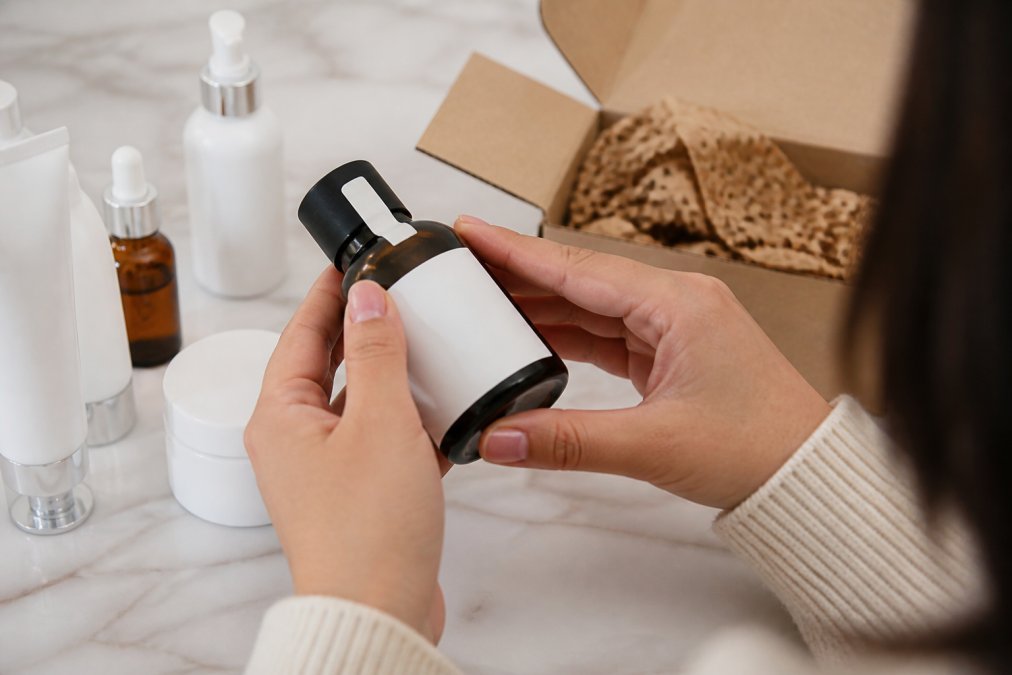
Check these details in order:
- Tamper-evident seals: a broken, missing, or poorly aligned seal is a hard stop.
- Spelling errors and typos: authentic brands proof their labels; fakes rarely do.
- Font consistency: mismatched typefaces, odd spacing, or blurry logos signal a copy.
- Fill levels: an unusually light bottle or a fill line that sits too low suggests dilution.
- Labeling standards: genuine products list ingredients, net weight, and manufacturer details clearly.
Using QR Codes, NFC Chips, and Manufacturer Verification Tools
Modern authentication has moved beyond the printed label. Many brands now embed QR code scanning or NFC technology linking a product to a product authentication record in the manufacturer's system, confirming the batch, production date, and sometimes the intended region.
The U.S. Food and Drug Administration's cosmetics resources explains how cosmetics are regulated and what safety information consumers can expect from legitimate products. Use official manufacturer tools whenever they exist, since third-party apps vary in accuracy. If a QR code leads to a dead page or a generic site, the product is likely fake.
The Dangers of Counterfeit Cosmetics: What You Risk
The stakes go beyond wasted money. Dermatological risks from counterfeit cosmetics include contact dermatitis, breakouts, and longer-term harm from banned or contaminated ingredients. Because fakes are made outside any regulated process, there is no supply chain transparency and no accountability.
What Has Actually Been Found in Fakes
The U.S. Food and Drug Administration's page on tainted beauty products documents how some counterfeit and misbranded cosmetics have contained substances never approved for skin contact. A common pattern in enforcement actions is the presence of:
- Heavy metals such as lead, mercury, and arsenic, sometimes at levels far above what any legitimate manufacturer would allow.
- Banned preservatives and steroids in creams marketed for eczema, whitening, or "rapid repair."
- Unlisted allergens and fragrance compounds that trigger reactions in people who specifically bought a product because it was labeled fragrance-free.
- Microbial contamination from unregulated filling facilities, which is a particular risk for water-based products like toners, masks, and lotions.
Symptoms That Should Stop You Immediately
If a product causes any of the following, stop using it immediately:
- Spreading redness, swelling, or a burning sensation within hours of application.
- A rash that worsens rather than fades after you discontinue use.
- Blistering, oozing, or skin that feels hot to the touch.
- Eye irritation, swelling, or vision changes after use near the eyes.
- Hair loss or scalp burns after a treatment product.
Keep the product, packaging, and batch code, they are evidence a dermatologist or regulator will ask for.
If You Have Already Applied a Fake: A Step-by-Step Response
The order matters.
- Stop using the product immediately. Do not finish the bottle to "see if it gets better."
- Wash the area with lukewarm water and a gentle, fragrance-free cleanser. Do not scrub or apply another product on top.
- Assess severity. Mild, fading irritation can often be managed at home. Spreading rash, blistering, eye involvement, or any difficulty breathing is a medical issue, seek care the same day. A pharmacist can advise on over-the-counter options for mild contact dermatitis; a physician or dermatologist is the right call for anything beyond that.
- Document everything. Photograph the reaction, the product, the packaging, the batch code, and the order confirmation. Note the date and time symptoms started.
- Contact the seller and the marketplace in writing. Request a full refund and state that the product caused a reaction. Marketplaces with buyer-protection policies typically require you to file within a set window, often 30 days from delivery.
- Report the product. The Federal Trade Commission's guidance on online shopping explains how to report a misrepresented online purchase. The FDA also accepts reports of adverse reactions and tainted cosmetics through its consumer complaint channels. Reporting is what triggers the paper trail that protects the next buyer.
- If medical care was needed, keep your receipts and your records. Some marketplaces and payment processors will consider documented medical costs in a dispute, and a consumer-protection attorney can advise on whether you have a claim.
Consumer Rights vs. Medical Advice
These are two separate tracks you can pursue at once. The medical track is about your body: see a clinician, follow their instructions, and keep records. The consumer track is about your money and the seller's conduct: file the marketplace claim, report to the FTC and FDA, and dispute the charge with your card issuer or payment processor if the seller refuses a refund. Do not let a refund offer talk you out of reporting, the report creates the enforcement record.
Authorized Beauty Retailers List: Where to Shop Safely
An authorized distributor buys directly from the brand or its approved wholesaler and can prove it. Building your own authorized beauty retailers list is the most durable protection you have.
| Where You Shop | Authentication Risk | What to Check |
|---|---|---|
| Brand's own site | Lowest | Confirm the domain is official |
| Authorized specialty retailer | Low | Verify on the brand's "where to buy" page |
| Large marketplace, third-party seller | High | Seller history, verified purchase badges |
| Social media or pop-up shop | Highest | Almost no recourse if something fails |
Buying from an authorized source also protects your consumer protection rights. The Federal Trade Commission's guidance on online shopping outlines what to do when an online purchase turns out to be misrepresented, including how to report it.
This is where a curated retailer earns its place. J5 Beauty & Skincare sources from brands you already know and trust, so you are not starting from suspicion.
Counterfeit cosmetics thrive on rushed purchases and unfamiliar sellers. Slowing down to check the seller, the batch code, and the seal catches most fakes before they reach your skin. J5 Beauty & Skincare takes that burden off your plate with a curated selection of premium makeup, skincare, and fragrance from brands you already trust, backed by authorized sourcing and a catalog built for sensitive and reactive skin types alike. Experience the difference of expertly chosen products designed to elevate your beauty regimen and inspire self-assurance.
Frequently Asked Questions
Is there a website that can check the authenticity of a product?
Many brands offer official online verification portals where you can enter a batch code or serial number to confirm authenticity. For example, some manufacturers provide dedicated pages for product authentication. Additionally, third-party apps like CheckFresh or brand-specific tools can help you look up batch codes. Always use the brand's official website or a trusted retailer's verification tool. If a product lacks a verifiable code or the brand has no such system, contact the manufacturer directly for guidance.
What app can I use to verify if a product is real?
Several apps help verify beauty products. CheckFresh and CheckCosmetic allow you to enter batch codes to check production dates and authenticity. Some brands have their own apps with QR code scanning or NFC technology. Always download apps from official app stores and ensure they are published by the brand or a reputable third party. Be wary of apps that ask for excessive permissions or personal data.
Are there fake beauty products on Amazon?
Yes, counterfeit beauty products have been found on Amazon and other large marketplaces. While Amazon has taken steps to combat fakes, third-party sellers can sometimes slip through. To reduce risk, buy from the brand's official store on Amazon or from sellers with high ratings and a history of verified purchases. Check the seller's name and look for the 'Amazon's Choice' or 'Sold by Amazon' badge. If a price seems too good to be true, it often is. You can also use the brand's authorized retailer list to confirm if a seller is legitimate.
How do I check if my product is authentic?
Start by examining the packaging for spelling errors, poor print quality, or inconsistent fonts. Check for a batch code or serial number and verify it on the brand's official website or a trusted app. Look for tamper-evident seals and ensure the product's texture, scent, and consistency match what you expect. If you have doubts, contact the manufacturer with photos and the batch code. They can confirm if the product is genuine. Additionally, keep your receipt and purchase from authorized retailers to ensure recourse if needed.