

How to Find Products for Sensitive Skin
Table of Contents
- Understanding Your Skin's Sensitivity Triggers
- How to Read Ingredient Labels and Spot Irritants
- Ingredients to Avoid for Sensitive Skin
- How to Patch Test Skincare Products Safely
- Using the EWG Skin Deep Database Guide
- Building a Routine with Products for Sensitive Skin
- Budget-Friendly and Dermatologist-Tested Options
- Frequently Asked Questions
Last Updated: September 20, 2026
Understanding Your Skin's Sensitivity Triggers
Sensitive skin reacts more intensely to products, environmental factors, and irritants. A compromised skin barrier, the outermost protective layer, leads to redness, itching, burning, or inflammation.
Common triggers include harsh cleansers, fragrance, alcohol, extreme temperatures, and pollution. Sensitivity can be innate or develop from overuse of strong actives or repeated irritant exposure.
Understanding your specific triggers is the first step to finding products for sensitive skin that actually work. Keep a two-week log noting products used, environmental conditions, and reactions to reveal patterns.
Conditions like eczema, rosacea, and contact dermatitis amplify sensitivity and require more targeted product selection.
How to Read Ingredient Labels and Spot Irritants
Ingredient lists are ordered by concentration; the first five ingredients make up the bulk of the formula.
Start by scanning for known irritants before you buy. Look for these red flags on the label:
- Fragrance or parfum (even "natural" fragrance irritates sensitive skin)
- Alcohol denat (drying and irritating)
- High concentrations of essential oils
- Sulfates (sodium lauryl sulfate, sodium laureth sulfate)
- Parabens (if you're sensitive to preservatives)
- Synthetic dyes or colorants
Ingredient names matter more than marketing claims. "Hypoallergenic" and "dermatologist-tested" are unregulated marketing terms, not safety guarantees.
Shorter ingredient lists mean fewer potential irritants; a 10-ingredient cleanser is often safer than a 30-ingredient one.
Active ingredients (niacinamide, ceramides, hyaluronic acid) do the work; supporting ingredients are preservatives, thickeners, and emulsifiers. Sensitive skin benefits from gentle actives and minimal supporting ingredients.
Ingredients to Avoid for Sensitive Skin
Certain ingredients consistently trigger reactions in sensitive skin. While individual tolerance varies, these are the most common culprits to avoid:
Fragrance and Scent Compounds: Fragrance is the leading cause of contact dermatitis and includes essential oils, extracts, and synthetic molecules. Even "unscented" products may contain fragrance-masking ingredients.
Sulfates: Sodium lauryl sulfate and sodium laureth sulfate strip the skin barrier. They create lather but damage the protective lipid layer, leading to dryness and irritation.
Alcohols: Alcohol denat (SD alcohol) is drying and disrupts the skin barrier. Glycerin and cetyl alcohol are gentler alternatives.
Preservatives to Watch: Parabens, formaldehyde releasers, and phenoxyethanol can trigger reactions. Choose paraben-free and sulfate-free formulations.
Synthetic Dyes: FD&C or D&C color additives serve no skincare purpose and often irritate; skip colored products.
Acids at High Concentrations: Glycolic acid, lactic acid, and salicylic acid exfoliate but irritate sensitive skin at high doses. If you use them, start low (under 5%) and patch test first.
Retinoids: Retinol and retinyl palmitate are powerful but irritating for sensitive skin. Gentler alternatives exist, but introduce them slowly.
The safest approach: start with fragrance-free, sulfate-free, and paraben-free products. Then add complexity only if your skin tolerates it.
How to Patch Test Skincare Products Safely
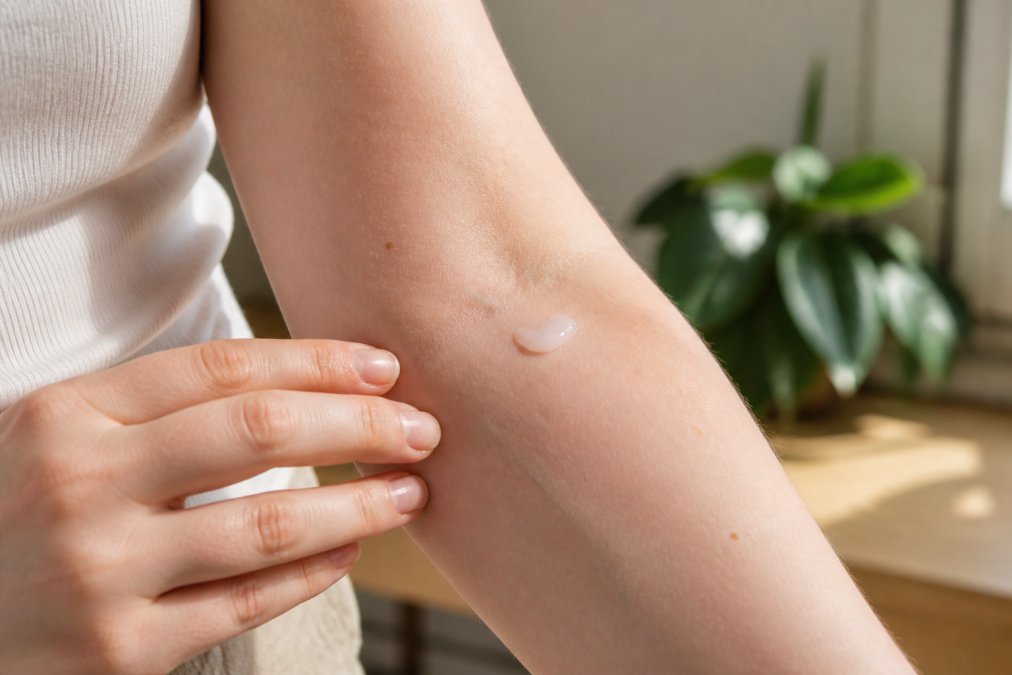
Patch testing prevents full-face reactions and is essential before using any new product on sensitive skin. Apply a pea-sized amount to your inner arm, behind the ear, or jawline. Leave it for 24 hours without washing or touching it. Observe for redness, itching, swelling, or burning. If no reaction appears, apply to your face. One day of patience beats days of recovery.
For thorough testing, apply for 3-5 days; some reactions develop slowly. Introduce one new product at a time to isolate any reaction.
If itching, redness, or burning occurs, stop immediately, wash with cool water, and discontinue the product.
Using the EWG Skin Deep Database Guide
The Environmental Working Group (EWG) Skin Deep database rates skincare ingredients by safety. It's free and searchable at EWG Skin Deep.
The database assigns hazard scores from 1 (safest) to 10 (most hazardous) based on toxicity data, allergenicity, and regulatory restrictions. A score of 1-2 is ideal for sensitive skin.
How to Use It:
Search for any product by name or ingredient. The database shows the hazard score for each ingredient, plus links to safety research. Green ratings (1-2) are safe. Yellow (3-6) require caution. Red (7-10) should be avoided.
Use it to compare products before buying.
Building a Routine with Products for Sensitive Skin
A minimal routine is best for sensitive skin. The real challenge is introducing products without triggering flare-ups that derail progress.
Start with the Core Three
The Two-Week Introduction Protocol
-
Pick one new product. Choose based on a specific need: hydration, redness, or texture. Don't add a serum and a treatment simultaneously.
-
Start low frequency. If it's an active (vitamin C, niacinamide, gentle retinol), use it only 2-3 times per week for the first two weeks. This lets your barrier adapt without shock.
-
Patch test first. Even if you've patch tested before, test again on your inner arm for 24-48 hours. Sensitivity can shift with seasons, stress, or hormones.
-
Watch for delayed reactions. Some irritants cause redness or itching within hours; others take 3-5 days to appear. Keep a simple log: date, product, any changes in texture, redness, or sensation.
-
Wait the full two weeks. This feels long, but it's the only way to isolate which product caused a reaction if one occurs. If you add a serum on Monday and a moisturizer on Wednesday, and your skin flares on Friday, you won't know which one did it.
Managing Setbacks Without Abandoning Progress
- Stop the new product immediately. Return to your core three for one week.
- Don't blame the category. If a niacinamide serum irritated you, that doesn't mean all niacinamide will. The issue might be the concentration, the other ingredients, or the brand's formulation.
- Identify the likely culprit. Review the ingredient list of the product that caused the reaction. Cross-reference it with the EWG database. Look for fragrance, alcohol, or high concentrations of actives.
- Try a different brand in the same category. Once your skin calms, test a gentler alternative. Progress isn't linear; it's iterative.
Avoid These Common Mistakes
- Layering too many actives. Sensitive skin doesn't tolerate niacinamide, vitamin C, and retinol on the same night. Pick one active, use it 2-3 times per week, and master it before adding another.
- Switching products too fast. The urge to "fix" your skin quickly leads to more irritation. Slow wins.
- Using hot water. Warm or cool water only. Hot water strips the barrier and triggers inflammation.
- Over-cleansing. Twice daily is enough. Washing more than that disrupts the skin's natural pH and microbiome.
- Ignoring environmental changes. If you travel, move to a new climate, or enter a stressful period, your skin may need a simpler routine temporarily. Revert to your core three until conditions stabilize.
Budget-Friendly and Dermatologist-Tested Options
Quality skincare for sensitive skin doesn't require premium pricing. Many affordable, dermatologist-tested options are fragrance-free and clinically proven. Affordability also includes addressing hidden triggers: water quality, laundry products, and environmental factors.
Affordable Skincare Brands with Dermatologist Backing
- CeraVe Foaming Facial Cleanser (~$8-10) is fragrance-free, sulfate-free, and contains three essential ceramides. It removes oil without stripping.
- Cetaphil Gentle Skin Cleanser (~$6-8) is a non-foaming option that works with or without water, ideal for very reactive skin.
- Vanicream Free & Clear Facial Cleanser (~$7-9) is free of dyes, fragrance, parabens, and sulfates, the most restrictive formula of the three.
Environmental and Lifestyle Triggers
Water Quality and Hard Water
- Test your water. Search "[your city] water quality report" online for mineral content and pH.
- Use filtered water for cleansing. Keep a pitcher of filtered water in your bathroom for the final rinse after cleansing.
Laundry Detergent and Fabric Softener
- Switch to fragrance-free, dye-free detergent.
- Skip fabric softener and dryer sheets. Use white vinegar as a rinse aid or wool dryer balls instead.
- Wash new clothing before wearing to remove manufacturing residues and dyes.
Tap Water and Chlorine
Humidity and Temperature
Stress and Sleep
- Prioritize 7-9 hours of sleep (the CDC). Sleep deprivation impairs barrier repair (pubmed.ncbi.nlm.nih.gov). Your skin does most of its healing at night.
- Manage stress. Stress hormones like cortisol trigger inflammation. Even 10 minutes of daily meditation or gentle movement can reduce flare-ups.
Building an Affordable, Holistic Routine
Combine budget-friendly skincare with environmental fixes for maximum results:
- Core skincare (~$30-40/month): Affordable cleanser, moisturizer, and sunscreen from CeraVe, Cetaphil, or Vanicream.
- Water filtration (~$30 one-time, $5-10/year for replacements): Showerhead filter removes chlorine and minerals.
- Laundry products (~$5-10/month): Fragrance-free detergent and white vinegar instead of fabric softener.
- Humidifier (~$30 one-time): Raises indoor humidity and reduces barrier damage.
Total first-month investment: ~$75-90. Monthly maintenance: ~$40-55.
When to Invest in Premium Products
Frequently Asked Questions
What ingredients should I avoid if I have sensitive skin?
Common irritants include sulfates, parabens, synthetic dyes, fragrance, and alcohol denat. Look for products labeled fragrance-free and paraben-free. The EWG Skin Deep database can help you scan ingredient lists for potential allergens. Avoid formulations with high concentrations of essential oils or strong preservatives if your skin reacts easily. Always patch test new products before applying them to your entire face.
How do I know if a product is safe for products for sensitive skin?
Look for products that are dermatologist-tested and hypoallergenic, but remember these are marketing terms and not safety guarantees. Look for non-comedogenic formulations that won't clog pores. Read the ingredient list and cross-reference it with known irritants. Patch test on a small area first, waiting 24-48 hours to observe any redness, itching, or inflammation. Products like Cetaphil Gentle Skin Cleanser are specifically formulated for sensitive skin and dermatologist-tested.
What is the best way to transition to a new skincare routine?
Introduce one new product at a time, waiting 1-2 weeks before adding another. This helps you identify which product causes irritation if a reaction occurs. Start with a gentle cleanser and moisturizer, then add serums or treatments. Use products for sensitive skin that are pH-balanced and free from synthetic dyes. Keep your routine simple initially, cleanser, moisturizer, and sunscreen are the foundation. Avoid mixing too many active ingredients until your skin adapts.
Why is patch testing important for sensitive skin?
Patch testing reveals whether your skin will react to a product before you apply it to your entire face. Even dermatologist-tested products can trigger reactions in individual cases because skin sensitivity varies widely. Apply a small amount behind your ear or on your inner arm and wait 24-48 hours. If no redness, itching, or inflammation appears, the product is likely safe for your face. This simple step prevents wasted money and painful skin flare-ups.
Finding products for sensitive skin requires patience and strategy. Start with a patch test, read ingredient labels carefully, and build a minimal routine with dermatologist-tested formulas. J5 Beauty & Skincare offers a curated selection of proven options like Cetaphil and Eltamd that remove the guesswork. Your skin barrier will thank you.